
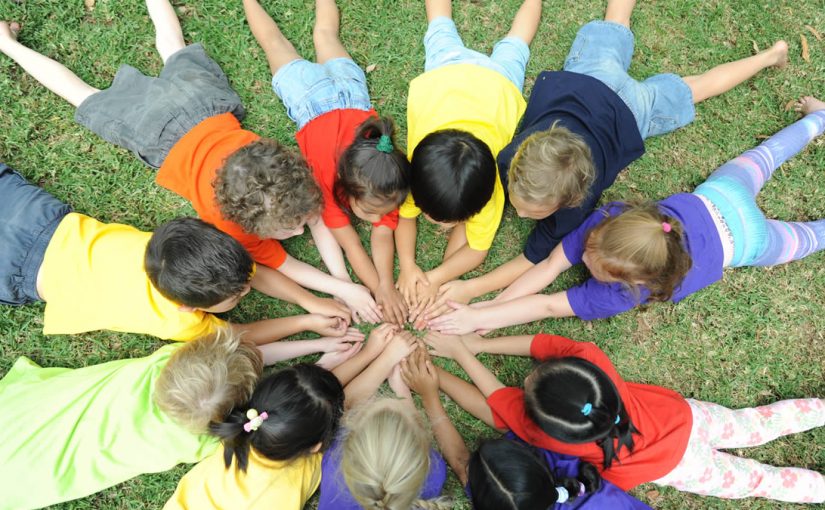
Our learning environments are thoughtfully designed to be inclusive, inviting and responsive to children’s interests, ideas, strengths, cultures and abilities.
Our highly qualified, skilled and experienced early childhood professionals provide a rich and engaging learning program that responds to each child’s strengths, interests, abilities, culture and experiences. Our curriculum is grounded in the belief that play is a powerful context for learning, providing children with opportunities to explore, investigate, imagine, create, communicate, collaborate and make meaning of the world around them.
Our program is guided by the Early Years Learning Framework (EYLF) V2.0, which recognises children as confident and involved learners and active participants in their own learning. We view every child as capable, curious and full of potential, with their own unique identity, knowledge and perspectives. Children are supported to exercise agency, make choices, initiate ideas and contribute to decisions that affect their learning and everyday experiences.
Educators use intentional teaching, responsive interactions and spontaneous opportunities to extend children’s thinking, learning and development. Educators document children’s learning and use an ongoing cycle of observation, planning, implementation and reflection to build on children’s strengths, interests and emerging capabilities and to ensure the program continues to respond to each child. Families are valued as partners in this process, sharing their knowledge and perspectives to strengthen continuity between home and preschool.
Learning happens throughout the whole preschool day — through play, relationships, conversations, group experiences, routines, transitions, mealtimes and interactions. Our program provides opportunities for children to develop across all areas of learning, with a strong focus on wellbeing, communication, social and emotional development, connection, creativity, problem-solving and growing independence. School readiness and transition to school are embedded naturally within our everyday program, supporting children to develop the skills, confidence and dispositions they need for their next stage of learning.
We value the rich diversity of our children, families and community and strive to create an inclusive environment where every child feels a strong sense of belonging, is respected and heard, and has equitable opportunities to participate, contribute and learn.
Supporting Children’s Social and Emotional Development
We recognise the importance of children developing strong social and emotional skills as a foundation for wellbeing, learning and positive relationships. Educators intentionally support children to understand and express their emotions, recognise the feelings and perspectives of others, communicate their needs, navigate social situations, resolve conflicts and develop a growing sense of agency and self-advocacy.
Through secure, responsive relationships and opportunities for sustained play, collaboration and shared problem-solving, children are supported to develop confidence, resilience, empathy and a sense of belonging. Educators use co-regulation, intentional teaching and responsive interactions to support children as they learn to manage emotions and behaviour, while recognising that these skills develop over time and at different rates for each child.
We work collaboratively with children, families and the wider community to understand each child’s strengths, identity, experiences and individual needs. This creates an inclusive environment where children feel safe, respected, heard and valued, and are supported to participate, build meaningful relationships and develop the skills to navigate the social world with increasing independence.